Inspections & condition
How to Prevent Rust on a Classic Car: Build a Practical Care Plan
Build a classic-car rust-prevention plan around condition, cleaning, drainage, dry storage and documented follow-up, with a free condition and moisture worksheet.
Published
Sources checked . How this guide is prepared.
START HERE
The short answer
Reduce a classic car’s rust risk by controlling salt, dirt and trapped moisture, protecting its finish and checking the places where water collects. Start with the car’s existing condition and storage space. A cover or fresh coating cannot establish that hidden metal is sound or repair corrosion already present.
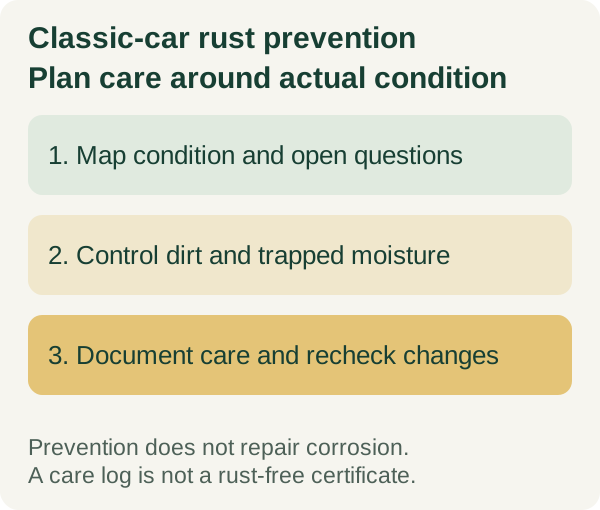
Build a repeatable care record instead of relying on one treatment. That record also helps a future buyer understand what was inspected, maintained or repaired and what remains unknown.
Start with condition before choosing protection
Arrange an appropriate body or classic-car inspection when you do not know the vehicle’s underlying condition. Ask the inspector to identify accessible concerns, areas that could not be examined and any further work needed. Do not crawl beneath a vehicle supported only by a jack or remove trim to investigate an unfamiliar area yourself.
Create an original condition map with a separate entry for each area. Record the date, location, photograph if safely available, observed issue and next step. Keep a stain, paint bubble, confirmed corrosion finding and completed repair as different kinds of evidence.
For example, “damp trunk liner after rain” identifies an observation. It does not prove where water entered or how much corrosion exists underneath. The useful next action is to have the moisture source and surrounding condition assessed, then record the result.
Keep salt and dirt from remaining on the car
Toyota’s corrosion-care manual section identifies trapped moisture and road contamination, damaged protective finishes and blocked drainage as corrosion concerns. It also warns that a damp, poorly ventilated garage can remain a problem even when heated.
Use the care instructions appropriate to your classic’s materials, paint and restoration history. Ask the restorer about cleaning methods before using pressure, abrasive products or solvents on unfamiliar finishes. The Toyota section illustrates manufacturer care principles; its specific washing intervals and products are not instructions for every classic.
Progressive’s classic-car storage guidance recommends cleaning salt and dirt from the underside before storage. Plan for safe cleaning and drying with someone who understands the car, including areas you cannot reach without proper equipment.
Treat drainage and interior moisture as separate checks
The Toyota section calls attention to door, rocker and frame drainage, moisture beneath floor mats and paint damage. Have the relevant openings and accessible cavities checked for the actual model. Do not create new holes or push unfamiliar tools into body cavities based on a generic checklist.
For an original moisture log, use four entries: where wetness appeared, when it appeared, what was checked and whether the area dried after the proposed correction. A dry dashboard and seats do not answer whether the trunk or floor is dry.
If the same area becomes wet again, keep the recurrence in the record. Repeatedly drying a liner without finding the source can hide the pattern you need a specialist to assess. Describe the observation rather than assigning a leak source without evidence.
Choose a dry storage arrangement
Hagerty’s classic-car storage guide emphasizes the storage location, preferring a dry, temperature-controlled space and describing a ground barrier where appropriate. Its preparation advice includes cleaning and finish care before covering the car.
Progressive also recommends dry storage and moisture control, including considering a dehumidifier that is checked and emptied as needed. Compare the actual space: water entry, damp floors, ventilation, access for checks and the owner’s ability to maintain equipment.
A garage label alone does not settle those questions. Before paying for storage, ask what happens after heavy rain, who checks for water and how you can inspect the vehicle. Keep promised services in the written agreement. Do not infer that climate control automatically means every humidity or water problem is addressed.
Use covers and finish care appropriately
Progressive recommends a fitted, breathable cover after preparing the car for storage. Hagerty recommends cleaning before covering. Ask about a cover suitable for the intended location and finish, and store the car and cover in the condition recommended by their manufacturers.
For coatings, waxes, cavity treatments or underbody products, obtain advice for the actual surfaces and existing restoration. Ask what preparation is required, where the treatment will be applied and what inspection or maintenance follows. A product claim does not establish that corrosion beneath it has been assessed.
Keep before-treatment photographs, the scope of preparation, materials used and the invoice. If an area was inaccessible or a repair was deferred, record that limitation rather than allowing a fresh finish to imply a complete structural assessment.
An original seasonal care plan
Use three checkpoints rather than a universal calendar. Before storage, establish the condition record, clean appropriately, address known moisture sources and prepare the location. During storage, check the agreed areas and equipment and record new dampness or changes. Before returning to use, have the vehicle’s condition and other storage-related needs checked under its actual maintenance instructions.
This plan is a way to assign responsibility, not a guaranteed rust-prevention schedule. Choose the timing with the people maintaining the car, considering climate, use and condition. An unresolved concern should trigger follow-up instead of waiting for the next planned date.
Prevention is different from selling a rusty car
This guide addresses ongoing care. If rust is already affecting a sale decision, use the selling-a-car-with-rust guide. For a purchase, combine the condition map with the broader used-car inspection checklist.
The classic-car selling guide helps organize history and documentation. Share genuine inspection findings and repair records; a care log is useful evidence of what you did, not a certificate that hidden areas are rust-free.
Download the classic-car rust-prevention worksheet
Use the blank classic-car condition and moisture-control worksheet for sixteen inspection, storage, cleaning, treatment and follow-up questions. Assign a responsible person and next date for each open item.
Source check: November 21, 2026. No classic car was inspected or treated for this guide. The condition-map example and seasonal plan are original planning tools, not a restoration specification, structural finding or independent specialist review.
BEFORE YOU TAKE THE NEXT STEP
Practical checklist
Check the VIN, ownership record and seller details.
Arrange an independent inspection and review the written terms.
Confirm the total cost and title-transfer process before paying.
CHECK THE DETAILS
Sources and further reading
Follow the source linked beside a claim for its context. For a transaction, confirm current requirements with the relevant agency, lender or provider.
- Toyota’s corrosion-care manual sectiontechinfo.toyota.com
- Progressive’s classic-car storage guidanceprogressive.com
- Hagerty’s classic-car storage guidehagerty.com
YOUR NEXT READ
Keep reading