Buying a car
Questions to Ask When Buying a Used Car: Answers to Verify Before Paying
Ask about ownership, repairs, inspections and complete terms. Use an evidence checklist and free worksheet to verify seller answers.
Published
Sources checked . How this guide is prepared.
START HERE
The short answer
Before buying a used car, ask who owns it, whether money is owed on it, what damage and repairs it has had, whether you can arrange an independent inspection, and what the complete purchase terms are. Then match the answers to the vehicle, records and written agreement. A reassuring conversation is a starting point, not proof of condition or ownership.
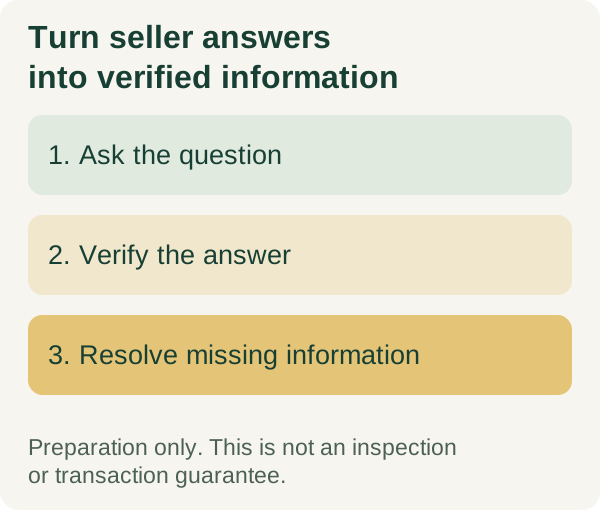
Start with the questions that could change whether you visit at all. Ask detailed condition questions once the car, seller and price are clear. Save payment and document arrangements for a specific, verified transaction.
This guide uses AI-assisted research checked November 18, 2026. CarTruvo operates a vehicle marketplace and has a commercial interest in helping people prepare to buy and sell. The questions and worksheet are original preparation aids, not a vehicle inspection, transaction guarantee or account of a purchase we conducted.
The five questions to ask before arranging a visit
Send a short message instead of an overwhelming questionnaire:
Hi, is the [year, make, model] still available at the listed price? Are you the titled owner or a dealer, and is a lender involved? Could you confirm the VIN, current mileage and any title brand or known damage? If it looks suitable, can I arrange an independent inspection before committing? Are there any conditions or charges attached to the advertised price?
Use the answers to decide what to verify next:
- Who is selling this car?: evidence to request: Seller's role and an ownership or authorized-sale process you can verify privately.; if the answer is missing or conflicts: Resolve who has authority before discussing a handoff..
- Is a loan or lien involved?: evidence to request: Lender's official payoff and title-release process, confirmed through its own contact channel.; if the answer is missing or conflicts: Do not treat the seller's promise as a completed lien release..
- Which vehicle is it?: evidence to request: VIN and mileage that match the listing, vehicle and records.; if the answer is missing or conflicts: Ask for an explanation before spending money on reports or travel..
- What damage or title history is known?: evidence to request: Relevant history, repair records and current title information.; if the answer is missing or conflicts: Separate “I don't know” from a documented answer and investigate..
- Can I arrange my own inspection?: evidence to request: Agreed inspector, location, access and timing.; if the answer is missing or conflicts: Resolve access before paying a deposit or booking travel..
Keep identity and title documents out of public listing comments. You do not need the seller's bank login or a public photo of their signature to start these questions.
What should you ask about ownership and title history?
1. Are you the named owner, and how long have you had the car?
Ask whether the seller is an individual owner, dealer or authorized representative. If the person is selling for a relative, estate or business, ask how their authority will be documented for the transfer.
“How long have you owned it?” and “Why are you selling?” help establish context. A short ownership period or a routine answer does not establish fraud or reliability. Check the ownership story against the records instead of deciding from the explanation alone.
2. Is the title available, electronic or held by a lender?
Ask which state issued the title, whether a lien is recorded and how the transferable documents will be delivered. An electronic title or loan can require a coordinated process. “I'll mail it later” leaves timing and responsibilities unresolved.
For a financed vehicle, confirm the plan with the lender through a contact method you obtain independently. Our guide to buying a car privately covers the wider transaction process. The seller can use our financed-sale guide to prepare its side.
3. Has it had a salvage, rebuilt, flood or other title brand?
Ask about the current title and earlier history. The Justice Department's NMVTIS consumer guidance explains title, odometer and brand information, including differences between states and possible reporting gaps. A report without a damage entry does not prove the car has never been damaged.
Use the VIN to obtain information through a provider you choose. Our CARFAX vs. AutoCheck comparison explains report comparisons; our clean-title guide explains why a title label does not establish mechanical condition.
What should you ask about condition and maintenance?
4. What damage, water exposure or major repairs do you know about?
Ask for the date, affected area, repairer and available invoices. Follow up on structural work, airbag repairs, engine or transmission replacement, and water exposure rather than accepting “minor accident” as a complete description.
Give relevant records to your inspector. A repair invoice helps explain work; it does not independently establish that every repair was completed correctly. A seller may also lack information from earlier owners.
5. Which maintenance records are available, and what is due next?
Ask for dated records showing mileage and work performed. Compare them with the manufacturer's schedule for the exact vehicle. Ask about unresolved warning lights, leaks, unusual noises, starting problems and features that do not work.
Request a specific answer: “What service or repair have you postponed?” is more useful than “Does it need anything?” Missing records create uncertainty; they do not, by themselves, prove neglect. Ask your inspector how to investigate and budget for that uncertainty.
6. How has the vehicle been used, and does the mileage make sense?
Ask about commuting, delivery or rideshare work, rental use, towing, long storage and modifications. These answers help your inspector choose follow-up checks. None is an automatic verdict on the car.
Compare the current odometer with dated service and history entries. Resolve inconsistencies rather than choosing a mileage threshold that supposedly makes every car a good buy. Use our used-car mileage guide for that separate comparison.
For an electric vehicle, ask for available battery-condition information, remaining coverage documents and included charging equipment. Have a qualified inspector explain what a battery test measures and what it leaves unknown. A dashboard range estimate alone does not answer the battery-condition question.
7. Are there open safety recalls, and what has already been repaired?
Check the actual VIN at NHTSA's recall lookup. Ask the manufacturer or authorized repairer about any open campaign and instructions for the vehicle before arranging a drive or pickup.
NHTSA explains that its VIN results have limits, including some recently announced recalls, older recalls and recalls already repaired. A result showing no unrepaired recall is not a complete service history or proof that the car has no safety defects. Request repair documentation when the seller says a campaign was completed.
What should you ask before the test drive and inspection?
8. Can I arrange an independent inspection before committing?
Agree on who will inspect the car, where it will happen, what access is available and who pays. Ask what happens if the inspection reveals a problem. A dealership certification, history report or state safety check answers different questions from an independent mechanical inspection. The FTC recommends an independent inspection even for a dealer-certified car.
If an off-site visit is unavailable, ask about a qualified mobile inspector. If no independent inspection is permitted, consider another vehicle. A refusal leaves a major information gap, even when the seller gives a plausible scheduling or insurance reason.
Our inspection checklist helps organize observations, and our inspection-cost guide helps plan the appointment. Ask for a written report identifying the vehicle and separating urgent concerns from scheduled maintenance.
9. Can we agree on a suitable test drive and cold start?
Ask whether the car can be viewed before it has been warmed up. Agree on a permitted route, driver requirements and insurance arrangements before driving. Do not drive a vehicle that appears unsafe or against the seller's or insurer's conditions.
Use the drive to note questions for the inspector. A quiet ten-minute trip cannot establish that the car is free of intermittent problems. If a warning appears, document the concern and investigate it before committing.
What should you ask about price, promises and payment?
10. What is the complete price for this specific transaction?
For a dealer, request an itemized written out-the-door quote and any financing, trade-in or rebate conditions. Ask which add-ons are optional and how declining them changes the quote. Do not compare an advertised vehicle price with another seller's total as if they covered the same items.
For a private sale, confirm the agreed vehicle price and separately investigate taxes, registration, insurance, transport and immediate repairs. If borrowing, compare the actual loan terms separately from the vehicle price. CarTruvo is not a lender and a seller's acceptance does not establish financing approval.
11. What warranty, return policy or promised repair is in writing?
For a dealer sale, read the Buyers Guide and the proposed agreement. Ask who provides any coverage, what is excluded and what action is required to use it. The FTC explains that federal law does not automatically give dealer buyers three days to cancel; state rules and the written policy matter.
For any seller, ask when a promised repair will be completed, who performs it and what documentation you receive. Resolve inconsistent promises before signing. Do not assume a private sale includes the dealer's obligations or a return period because the buyer changed their mind.
12. How will payment, documents and collection happen together?
Agree on the payment method, how receipt will be confirmed, which original documents will be delivered and who will collect the car. Check title-office requirements for the actual states involved. If a lender is involved, use the confirmed lender process.
Ask about both keys, manuals, charging accessories, existing accounts connected to the vehicle and any item excluded from the sale. Confirm promised items in the agreement. Keep personal banking information and identity records in appropriate private channels.
Turn the answers into a decision
Use the used-car seller question worksheet to keep four things separate: the seller's answer, evidence you checked, unresolved questions and your next action. Leave unknowns marked unknown; an empty history report or a friendly response should not fill those blanks automatically.
Hypothetical example: a seller says a warning light was “just a sensor,” but has no diagnostic record. Record that as the seller's explanation. Ask your inspector to investigate, obtain a repair estimate if appropriate, and decide using that evidence. Do not rewrite the explanation as a confirmed diagnosis.
Resolve ownership, safety, inspection access and complete terms before committing. If the cost or uncertainty exceeds your budget or tolerance, consider another car. When you are ready to compare suitable vehicles, browse CarTruvo listings and use the same questions consistently with each seller.
BEFORE YOU TAKE THE NEXT STEP
Practical checklist
Check the VIN, ownership record and seller details.
Arrange an independent inspection and review the written terms.
Confirm the total cost and title-transfer process before paying.
CHECK THE DETAILS
Sources and further reading
Follow the source linked beside a claim for its context. For a transaction, confirm current requirements with the relevant agency, lender or provider.
- Justice Department's NMVTIS consumer guidancevehiclehistory.bja.ojp.gov
- NHTSA's recall lookupnhtsa.gov
- FTC recommends an independent inspection even for a dealer-certified carconsumer.ftc.gov
YOUR NEXT READ