Buying a car
Extended Warranty on Used Cars: Compare the Contract Before You Buy
Check existing coverage, contract dates, exclusions, deductibles, claims and complete cost before buying an extended warranty or service contract on a used car.
Published
Sources checked . How this guide is prepared.
START HERE
The short answer
An extended warranty on a used car is often a separately purchased vehicle service contract. Whether it is useful depends on what protection the car already has, when the new coverage starts, which expenses the contract accepts and the complete price. Read the actual agreement before deciding.
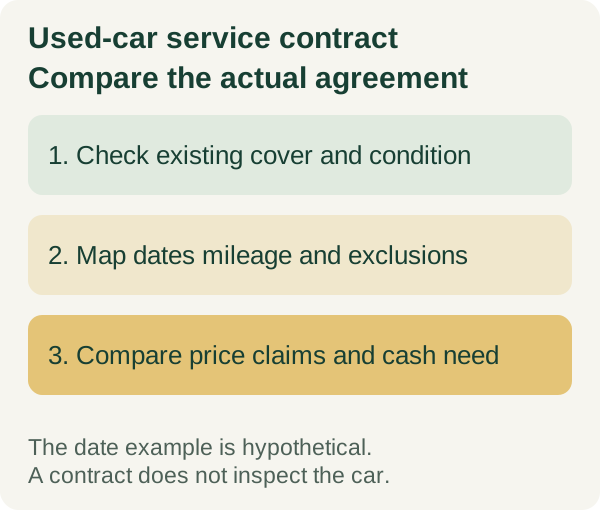
Start with the vehicle’s condition and existing coverage. Then compare the proposed contract with the repair costs and cash needs you would retain. A coverage label or small monthly-payment change cannot answer those questions on its own.
Warranty or optional service contract?
The FTC’s auto warranty and service-contract guidance distinguishes a warranty included with a vehicle from an optional service contract purchased separately. Products marketed as extended warranties can be service contracts covering only the repairs or services specified in the agreement.
Identify the seller, the company responsible for the obligation and the administrator handling claims. Request the complete contract for the actual vehicle and plan. Keep a sales brochure separate from the terms you would sign.
Ask the responsible provider to explain any conflict between the sales description and the agreement. Leave the issue unresolved until you receive a clear written answer; do not assume a familiar plan name makes the terms identical across sellers or cars.
Check what coverage remains on the car
The FTC’s used-car buying guide recommends obtaining the warranty documents and verifying remaining manufacturer coverage for the VIN. It also recommends an independent mechanical inspection even when a used car comes with a warranty or service contract.
Record existing coverage by component or system, expiration date and mileage limit. Ask what transfers to you and what evidence is required. Have an appropriate inspector identify current condition issues separately from potential future repair coverage.
Use the used-car inspection checklist for the wider assessment. An offered service contract is not a finding that the vehicle is sound or a written agreement to pay for an existing problem.
Three years may not mean three additional years
Check the contract’s actual start and end dates and how its mileage limit is measured. Ask the provider to explain overlap with existing protection and any waiting conditions before comparing the price.
Here is an invented date example. Assume existing coverage on the same systems runs through December 31, 2027, and no mileage limit ends any coverage sooner. Contract A runs January 1, 2027, through December 31, 2029. Contract B runs January 1, 2028, through December 31, 2030.
Both are 36-month periods. A overlaps the assumed existing protection for 12 months and extends beyond it for 24 months. B begins afterward and provides a 36-month period beyond it. These are hypothetical dates, not real plans or a conclusion that the two contracts otherwise provide equal benefits.
Record the actual dates and mileage rules. Do not subtract an overlap mechanically if the contracts cover different systems; ask the provider to identify what extra protection, if any, exists during that period.
Which expenses could remain yours?
FTC guidance warns that service contracts do not cover every repair. It calls attention to deductibles, repair authorization, labor and parts limitations, diagnostic teardown, service locations and related expenses.
For your actual agreement, ask the provider to mark the terms that answer these questions:
- What event and component must qualify for a repair to be covered?
- Which exclusions and maintenance-record requirements apply?
- How is the deductible charged, and when must you pay it?
- What limits apply to diagnostic work, labor, replacement parts and total benefits?
- Who must authorize work before the shop starts?
- Which shops can perform the work, and who pays them?
- Which towing, rental or other expenses remain yours?
Keep each answer with its contract section. A list of covered parts is only part of the comparison. For component-scope terminology, see the separate powertrain warranty guide and bumper-to-bumper warranty guide.
Compare the complete price and remaining cash need
The FTC’s extended-contract guidance recommends considering the initial cost, additional fees, benefit limits, claims process and the company responsible. It also describes setting aside savings as an alternative way to prepare for repairs.
Request the standalone product price and any payment terms. If you plan to finance it, obtain the changed amount borrowed and complete loan costs before agreeing. Keep the purchase decision separate from whether the resulting monthly payment appears manageable.
A savings reserve and a service contract address expenses differently. Compare the cash available now, the covered risks in the proposed agreement and the bills you could still face. This guide does not predict which car will fail or calculate a guaranteed return from buying or declining a contract.
Settle cancellation, transfer and claim questions
The FTC’s used-car guide specifically raises cancellation, refund and transfer questions. Request the terms and applicable fees for selling the car, canceling the product or ending ownership sooner than planned.
Keep the contract, maintenance records and written authorization instructions together. Before a repair, use the actual claims process and resolve who can approve the work and which expenses require your authorization.
If an unsolicited caller claims your warranty is expiring, verify the situation independently through your existing documents and known provider contact information. The FTC warns that urgent warranty-expiration messages can be sales pitches from companies unrelated to the dealer or manufacturer.
Download the used-car service-contract worksheet
Use the blank used-car extended-warranty comparison worksheet for sixteen existing-coverage, timing, cost, claims and exit questions. Use one copy per actual proposal and keep unanswered conditions open.
Source check: November 21, 2026. The guide compares the decision and contract terms, not a ranked list of providers. No actual contract purchase, claims decision, vehicle diagnosis, legal determination or independent specialist review was performed.
BEFORE YOU TAKE THE NEXT STEP
Practical checklist
Check the VIN, ownership record and seller details.
Arrange an independent inspection and review the written terms.
Confirm the total cost and title-transfer process before paying.
CHECK THE DETAILS
Sources and further reading
Follow the source linked beside a claim for its context. For a transaction, confirm current requirements with the relevant agency, lender or provider.
- The FTC’s auto warranty and service-contract guidanceconsumer.ftc.gov
- The FTC’s used-car buying guideconsumer.ftc.gov
- The FTC’s extended-contract guidanceconsumer.ftc.gov
YOUR NEXT READ