
Selling a Car in California: Title, Smog and Seller Notice
Prepare a California private car sale with title and smog guidance, a five-day seller-notice reminder and an organized closing checklist.
Sources checked . How this guide is prepared.
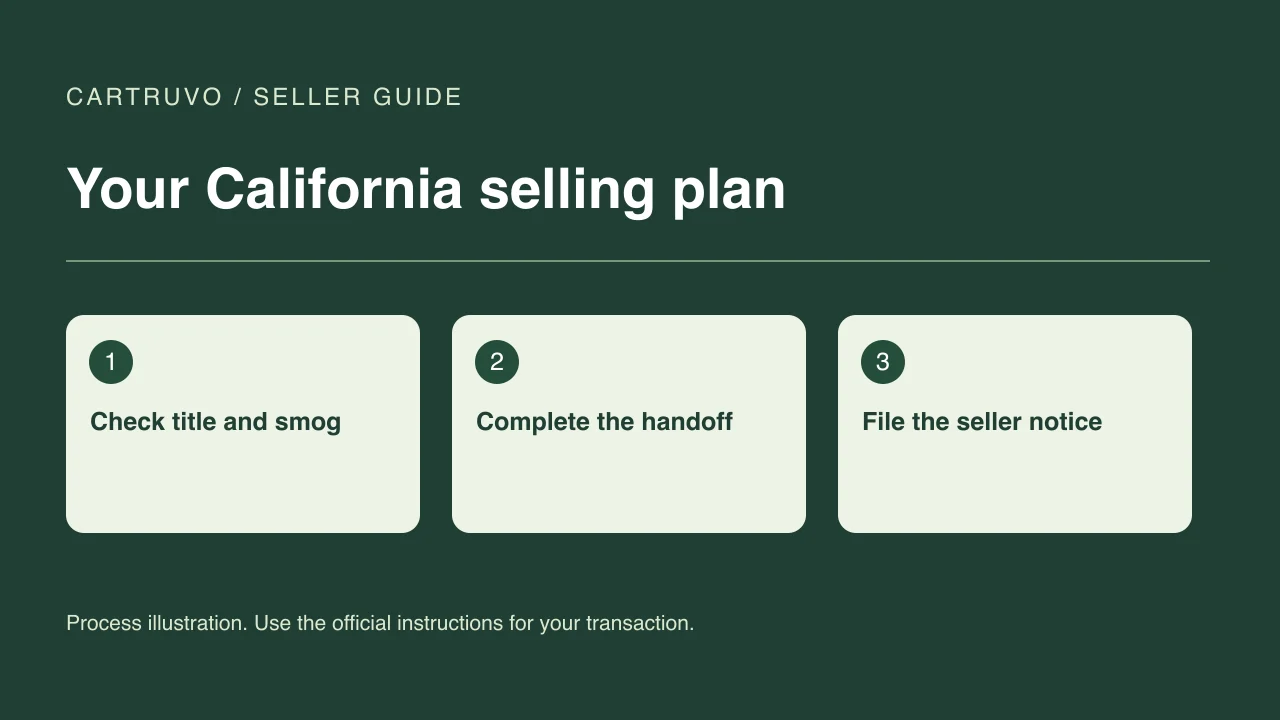
Selling a car privately in California involves marketing the vehicle and completing the ownership process. Before publishing an advertisement, confirm the title and lien situation and whether your sale requires smog certification. After transfer, treat the seller notice as its own task.
California DMV says sellers must submit a Notice of Transfer and Release of Liability within five days. Its title guidance separately says an ownership or lienholder change must be reported within ten days. Do not confuse the two deadlines. Use the current DMV title-transfer instructions for the forms and your specific transaction.
1. Confirm the title, owners and lender process
Check that the VIN matches the vehicle and identify the owners and lienholder on the record. The DMV describes a private sale or loan payoff as requiring seller or lienholder signatures, with the buyer submitting the transfer. Resolve the required participation before arranging a handoff.
If the title is missing, check eligibility for REG 227 using the linked DMV instructions.
For a loan, ask the lender how payment, lien release and title delivery work for a private sale. Do not promise that the buyer can complete everything immediately unless the actual process supports that promise. Read the missing-title guide for questions to ask.
2. Confirm the smog requirement for the sale
California DMV says a seller generally needs to provide a valid smog certification, subject to the applicable exceptions. Its sale guidance identifies an exception for a car less than four years old, with a smog transfer fee for the new owner. Other exclusions depend on vehicle characteristics, such as electric propulsion. Check the vehicle against DMV's smog instructions rather than assuming every car has the same requirement.
Do not use the gasoline-vehicle eight-model-year renewal exemption as a blanket private-sale exemption. Renewal and transfer are different questions. Confirm that the certification you plan to use remains valid for the actual transaction date.
If the car fails, identify the proper next step through the inspection station and the official resources linked by DMV. Avoid advertising it as ready for an ordinary sale while leaving an unresolved requirement for the buyer to discover.
Keep any relevant inspection documentation in your closing file. Describe known emissions or warning-light issues honestly in the advertisement, even while you are working out the appropriate repair or transfer process.
3. Price the car and document its condition
Choose comparable cars with similar model, trim, mileage, condition and title history. Separate private asking prices from dealer retail advertisements. An asking price is not proof that another seller received that amount.
Use current photos of the actual car, including flaws described in the advertisement. Collect service receipts and write down which keys and accessories are included. Do not describe a missing or lender-held title as “in hand.” Avoid unsupported claims about accident history, repair cost or future reliability.
Use the private-selling guide for pricing and appointments. If you plan to advertise on Facebook, follow the Marketplace listing guide and keep all advertisements consistent.
4. Prepare the closing file before a buyer travels
Use the official DMV instructions for the documents applicable to your vehicle. Assemble the ownership record or approved replacement process, participating owner and lienholder information, any required mileage disclosure, smog documents and the agreed transaction record.
Check that the person who will buy the vehicle is the person whose information will appear on the transfer documents. Ask the DMV about the particular forms for an estate, business owner, out-of-state vehicle or unusual title status. A generic checklist should not override those instructions.
A useful original preparation exercise is to walk through the handoff on paper: who signs, who receives payment, who releases the lien, who receives each document and what happens if one step cannot be completed. Resolve the missing answer before confirming the appointment.
The seller paperwork checklist helps you organize public listing information separately from private closing records.
5. Coordinate inspection, payment and signatures
Arrange a public daytime viewing where practical and ask your insurer about the test-drive arrangement. If the buyer wants an independent inspection, agree on the shop, appointment, cost and who transports the car.
Confirm the closing payment method with your financial institution. Do not release the car based only on a screenshot or a buyer's claim that a transfer has been sent. If there is a lender payoff, follow the confirmed instructions and clarify how any remaining proceeds or shortfall are handled.
Complete the true buyer details, date, price and required signatures carefully. Follow the document instructions for mileage and corrections. Keep secure copies of the completed records. Do not leave the transfer open for an unnamed future buyer.
6. Submit the seller notice and complete your handoff
Schedule the seller notice when you agree on the sale date and retain the filing confirmation with your transaction records.
Remove personal belongings, toll devices and digital access. Unpair phones, erase stored destinations and disconnect connected-car accounts according to the vehicle manufacturer's instructions. Coordinate insurance changes with your insurer after the completed transaction.
Mark the car sold on every platform. If you edited the advertisement while negotiating, check that every live version is removed after handoff.
California seller questions
Can a bill of sale solve a missing-title issue? Do not assume so. Follow DMV's approved process for your ownership record. Use the actual title and replacement instructions rather than relying only on a generic sale agreement.
Does a recent registration renewal mean I can skip smog for the sale? Not automatically. Check the transfer requirement, the vehicle's eligibility and the validity of any existing certification.
Can I start with CarTruvo? Once the facts and transfer path are clear, create a private listing with actual photos and accurate condition details. The buyer and seller arrange payment and ownership transfer directly. For CarTruvo review of your vehicle information, use sell my car.
Free tools for preparing your sale
Use the seller toolkit to compare estimated net proceeds, build a factual listing description and print your closing checklist. Your entries stay in the open page and are not submitted to CarTruvo.
You can also download the listing worksheet and closing checklist. These are planning aids. Use your state agency's current forms for the actual ownership transfer.