
How to Sell a Car on Facebook Marketplace: Listing to Handoff
List your car on Facebook Marketplace with a description template, buyer-message scripts, photo checklist and practical payment precautions.
Sources checked . How this guide is prepared.
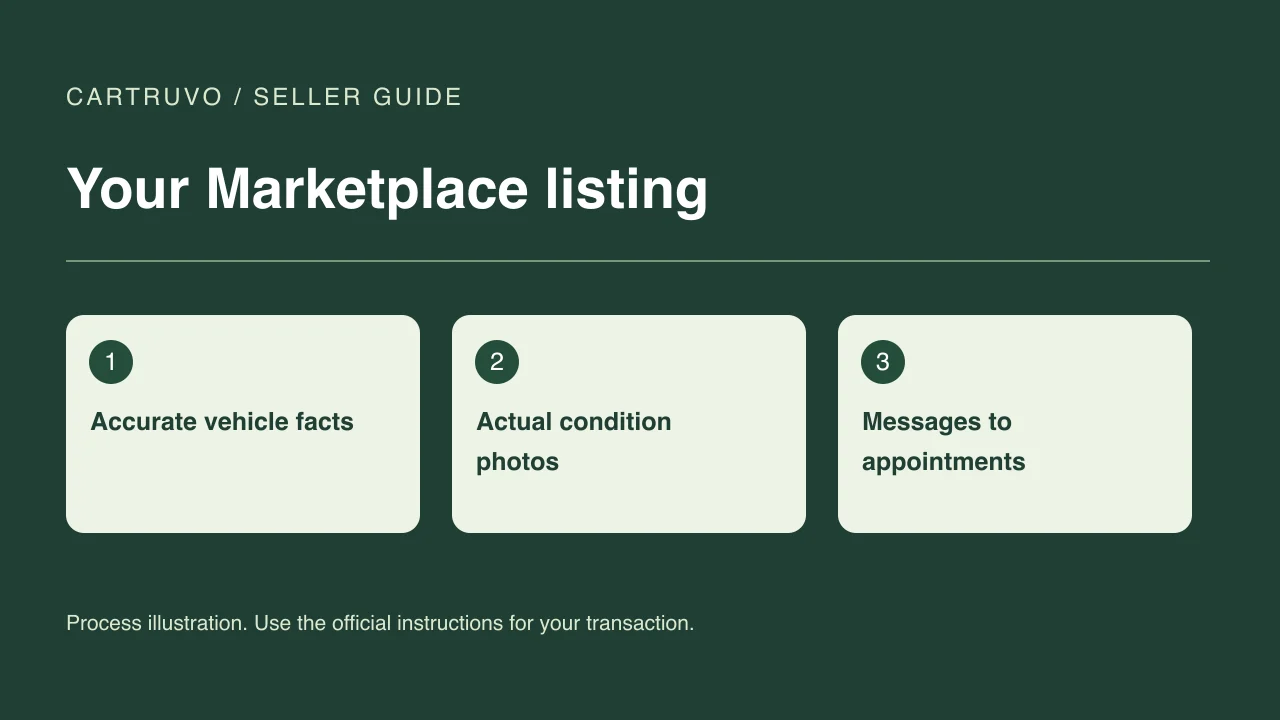
To sell your car on Facebook Marketplace, prepare the vehicle details and current photos, create a vehicle listing if that option is available to your account, publish an accurate asking price and description, and use messages to arrange an inspection. Agree on payment and the state ownership-transfer process before handing over the keys.
This guide is for an owner selling their own car. Repeated sales as a business can involve different platform rules and dealer licensing requirements. A personal listing guide does not establish that you can operate as a dealer.
Before you open Facebook: assemble your listing file
Have the year, make, model, trim, actual mileage, asking price, general location and VIN available. Confirm title and loan status, list known defects, and identify the service records you can show a serious buyer. If there is a loan or missing title, resolve the transfer plan first with the lender or issuing agency.
Use the seller paperwork checklist to separate the documents needed at closing from information suitable for an advertisement. Do not upload a driver's license, loan statement or full title image to the listing.
Take photographs before drafting the description. They will help you notice details that need explanation, such as a worn seat, a cracked windshield or a warning light.
How to list a car on Facebook Marketplace
Open Marketplace in your Facebook account and begin a new listing. Choose the vehicle category if it is offered. Enter the vehicle information and asking price using the controls available to you, add your actual photographs and description, and review the preview before publishing.
The screen labels, available categories and account eligibility can vary. If you cannot find the vehicle option, consult the help shown in your account rather than selecting an inaccurate category. Meta's ways to sell on Facebook explains Marketplace and other selling surfaces. These instructions describe the workflow, not a claim that every account has identical controls.
Before publishing, check that:
- The year and trim match your vehicle records.
- The advertised price is the intended vehicle price, not a misleading placeholder.
- Mileage matches the reading you photographed.
- The location is useful to local buyers without exposing your home address.
- The title description and known issues agree with the rest of the listing.
- You know how to update or remove the listing after a sale.
Review any sharing options separately. Posting the same car in a group creates another place you will need to keep current.
Use a clear title and an honest asking price
A useful title follows this pattern: “[Year] [Make] [Model] [Trim], [Mileage] miles.” Add a distinguishing feature only if it is accurate. Avoid a title stuffed with unrelated models or attention-getting words.
Compare similar local private-party cars, separating title history and condition. Asking prices are evidence of competition, not proof of completed transactions. A low price can draw messages without producing a workable offer, while a high price can make a reasonable car hard to compare.
Write down your minimum acceptable net proceeds privately. Set the public price using the comparables, not a fixed negotiation percentage. For a fuller pricing process, read how to sell a car privately.
A car listing description you can adapt
The following is a fictional example. Replace every detail with facts about your own car before using it.
“2016 compact sedan, automatic, 104,200 miles. Asking $7,800 in [city]. I am the titled owner and have the title available for review at closing. Oil change completed in [month/year]; receipt available. Air conditioning works during my current use. There is a dent on the passenger rear door and wear on the driver's seat, shown in the photos. Two keys included. Available for an in-person viewing and a buyer-arranged independent inspection. Please message with your preferred viewing time and any questions about the condition.”
If there is a loan, replace the ownership sentence with the actual lender process. If you do not know the car's complete accident history, do not insert a “never in an accident” claim. State what you know and what records you have.
A factual reason for selling is optional. Your home address, work schedule and personal financial situation are unnecessary.
Photograph the questions a buyer will ask
Show the exterior from several angles, front and rear seats, cargo area, dashboard and odometer. Include close views of the problems described in the advertisement. Photograph useful accessories separately so the buyer can see what is included.
Use daylight and a plain setting. Keep the car fully visible in the first image. Do not use filters that change paint color, remove defects or make worn surfaces appear new. A service receipt can support your description, but redact unrelated personal details before sharing it privately.
A photo of the odometer should distinguish the engine running from ignition-on status where warning lights would be interpreted differently. If a light remains illuminated while the engine is running, describe that accurately rather than hiding it.
Copyable replies for common buyer messages
For “Is this available?”: “Yes. The mileage, known issues and asking price are in the description. Are you looking to view it this week? I can arrange [two appointment windows] in [general area].”
For “What is your lowest price?”: “I am asking [price] based on the car's condition and comparable listings. You are welcome to inspect it and make an offer. Have you reviewed the [specific known issue]?”
For an inspection request: “I can coordinate an inspection at [agreed shop or location]. Please confirm the appointment, who will move the car and how the inspection cost will be handled before we set the time.”
These replies move the conversation forward without inventing buyer interest or pressuring someone into a deposit. A generic first message is not by itself evidence of a scam.
Watch for payment requests that reverse the transaction
The FTC describes an online-car-sale scam in which a supposed buyer sends an oversized check and asks for money back. Funds can appear in an account before the bank discovers the check is fake. Do not accept an overpayment or send the difference to the buyer or a shipping contact. Read the FTC's car-seller warning.
Keep your own safeguards for other messages: do not share account codes, follow an unsolicited login link or buy a report from a website chosen by a stranger just to keep their interest. Independently locate any bank, inspection shop or service you intend to use.
Agree on a payment method your financial institution can explain and verify for this transaction. Treat a photo of a check or transfer receipt as unverified. Do not assume that Facebook messaging provides protection for the vehicle payment.
Arrange the viewing and close the sale
Use a public daylight meeting where practical, tell someone your plan, and clarify test-drive coverage with your insurer. Agree on the route and driver before the car moves. Do not hand over the vehicle because a stranger says their relative or transporter will finish the paperwork later.
Once you agree on price, complete the state-specific ownership process with the actual buyer information. Read our Texas guide or California guide where applicable. Retain completed records and any required seller-notice confirmation.
Remove personal belongings, digital account access and toll devices. Update every listing after handoff so additional buyers do not keep arranging visits.
Why is my Facebook car listing not getting useful responses?
Few views suggest checking whether the advertisement is live, correctly categorized and visible under the account's current rules. Then review the cover photo, searchable vehicle details and price relative to genuinely comparable cars.
Many messages but few appointments suggest unanswered condition questions, an unclear location or an awkward viewing process. Improve those details before assuming a price cut will solve it.
Appointments but no acceptable offers suggest comparing your described condition with what buyers actually see. Ask what stopped the purchase, check the evidence and adjust the description or price if warranted. There is no universal number of messages that proves the price is right.
Can I list the same car on CarTruvo?
You can also create a private listing on CarTruvo. Keep the photographs, price and condition consistent. Buyers and sellers arrange inspection, payment, ownership transfer and transportation directly; a CarTruvo listing does not place the sale funds in CarTruvo custody.
Free tools for preparing your sale
Use the seller toolkit to compare estimated net proceeds, build a factual listing description and print your closing checklist. Your entries stay in the open page and are not submitted to CarTruvo.
You can also download the listing worksheet and closing checklist. These are planning aids. Use your state agency's current forms for the actual ownership transfer.